A fitness tracker can tell you how many steps you took, how well you slept, and how your heart rate changed throughout the day. Some can record workouts, suggest recovery times, or help you spot patterns in your daily routine.
But more data doesn’t automatically mean better insights.
The best fitness tracker for you is one that fits your goals, feels comfortable enough to wear consistently, and presents information in a way you can actually use. For some people, that might be a smartwatch with a screen and workout features. For others, a simple fitness band or smart ring may be a better fit.
Here are seven things to consider before choosing a fitness tracker.
1. Start with what you want to track
Before comparing devices, ask yourself what you want to learn or improve. The right device depends on what you’ll use it for.
For daily activity
If your main goal is to move more, you may only need the basics: step counts, activity reminders, and a simple view of your progress. A fitness band or smartwatch can be a good starting point.
For workouts and training
If you run, cycle, strength train, or follow a structured fitness plan, look more closely at:
- Supported workout types
- Heart rate tracking during exercise
- GPS availability
- Workout summaries and training trends
- Compatibility with your preferred fitness apps
- Whether the device can connect to accessories, such as a chest strap
Some devices are better suited to structured training than others. Check the specific activities you do rather than assuming every tracker records them equally well.
For sleep and recovery
If you’re most interested in sleep habits and recovery trends, consider a device that’s comfortable to wear overnight and presents sleep data in a way you find useful.
Smart rings, fitness bands, and some watches offer sleep tracking. The best choice may come down to whether you prefer wearing something on your finger or wrist while you sleep.
For an overall view of your health
You may want a device that brings together activity, sleep, heart rate, and other wellness information. In that case, pay as much attention to the companion app as you do to the wearable itself.
Ask yourself: What are the two or three questions I want this device to help me answer? Start there.
2. Choose a device you’ll actually want to wear
Fitness trackers come in several forms. Each has advantages, but comfort and convenience can matter just as much as features.
| Device type | Often a good fit for | Considerations |
|---|---|---|
| Smartwatch | People who want activity tracking, workout features, notifications, and a screen | May be larger on the wrist and need more frequent charging |
| Fitness band | People who want a smaller device focused on activity and health tracking | Screen size and advanced features may be more limited |
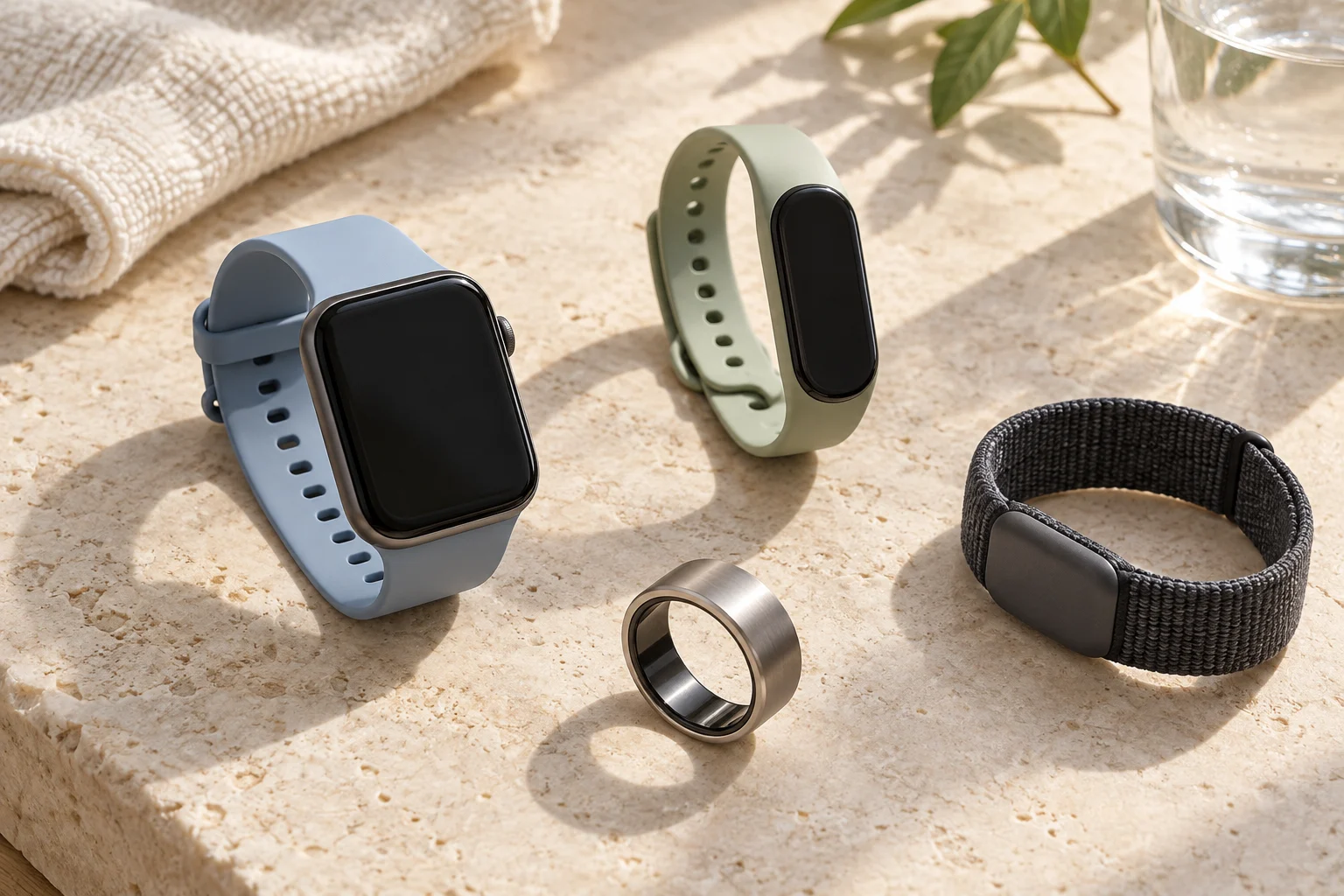
| Smart ring | People who prefer a discreet device, particularly for sleep and everyday wear | Usually doesn’t have a screen; comfort during weightlifting can vary |
| Screen-free band | People who want tracking without another display | You’ll generally need the companion app to view your data |
There’s no universally best form factor. A device that feels comfortable during the day may feel different while sleeping, lifting weights, or playing sports.
If possible, try on a device before buying it and check the return policy. For a ring, follow the manufacturer’s sizing guidance rather than assuming your usual ring size will fit the same way.
Consumer Reports recommends considering fit, phone compatibility, and battery life when choosing a wearable.
3. Look beyond the number of metrics
A long feature list can be appealing. But before choosing the device with the most measurements, consider whether those measurements will help you make decisions.
Common metrics include:
- Steps and activity: Useful for seeing how much you move throughout the day.
- Heart rate: Can help you understand patterns at rest and during activity.
- Sleep duration and patterns: Can help you notice changes in your sleep routine.
- Heart rate variability, or HRV: Often presented as one signal related to recovery or stress.
- Estimated calories burned: A rough estimate based on available data and the device’s calculations.
- Readiness or recovery scores: Scores that combine different measurements into a summary, depending on the device.
These numbers are estimates, and devices may measure or calculate them differently. A recovery score from one company shouldn’t automatically be treated as equivalent to a score from another.
For most people, the value comes from patterns over time, not from trying to interpret every number in isolation.
For example, you might notice that your sleep duration tends to drop on nights when you go to bed later than usual. That observation can prompt a useful change without requiring you to chase a perfect sleep score.
Can you trust fitness tracker health measurements?
Wearables can be useful for wellness tracking, but accuracy varies by device, measurement, fit, and situation. Some devices include specific health features with regulatory authorization, but that doesn’t mean every measurement on the device is intended for medical use.
If a reading concerns you, or you have symptoms, talk to a healthcare professional. Don’t use a wellness score as a diagnosis or as a reason to change treatment on your own.
Be especially careful with claims that sound too good to be true. The FDA warns against smartwatches and smart rings that claim to measure blood glucose on their own without piercing the skin. That warning is distinct from the use of an authorized glucose sensor that may display readings on a compatible device.
4. Make sure it works with your phone and other apps
A fitness tracker is part of a larger system. Before buying, check that the device and its companion app work with your phone’s operating system and version.
Also consider where you want your information to go. For example:
- Can the app connect with Apple Health or Health Connect?
- Can it share workouts with the fitness apps you already use?
- If you use another wearable, can the information be viewed together?
- Can you export your data if you switch devices?
- Which types of information are actually shared?
The last question matters. Two apps may connect, but that doesn’t necessarily mean every metric transfers between them. One might share steps and workouts but not a particular recovery score or sleep measurement.
Check the current compatibility details for the specific device and app before purchasing.
5. Consider battery life and charging habits
A tracker can only collect information when you’re wearing it. If charging becomes inconvenient, you may miss the very data you bought the device to see.
Think about when you’ll charge it:
- Tracking sleep? You’ll need a charging routine that doesn’t regularly leave the device off your body overnight.
- Tracking long workouts? Check battery life with GPS or other workout features enabled.
- Traveling often? Consider whether you’re comfortable bringing a charger or charging frequently.
Manufacturer battery estimates are useful for comparison, but real-world results depend on settings, usage, GPS, and other features. Look for estimates that match how you plan to use the device.
A convenient charging routine matters more than the longest advertised battery life if you’re happy wearing and using the device consistently.
6. Check the app, subscriptions, and total cost
The purchase price may not be the full cost.
Some wearables provide their core features without a recurring fee. Others offer subscriptions for deeper insights, historical data, coaching, or other features. What’s included can change, so review the current details before you buy.
Ask these questions:
- What can I see without a subscription?
- Which features require an ongoing payment?
- Is there a free trial, and what happens when it ends?
- Can I still view my historical data if I cancel?
- Are there extra costs for accessories or replacement bands?
It’s also worth looking at the companion app before committing. A device may collect plenty of data, but if the app is confusing or hides the information you care about, you may not use it for long.
Look for an app that makes it easy to answer your original questions—whether that’s “Am I moving more?” or “How consistently am I sleeping?”
7. Understand what happens to your health data
Fitness trackers can collect sensitive information about your daily life. Depending on the device and settings, that could include activity, sleep, heart rate, location, and other personal details.
Before you sign up, review the company’s privacy settings and policy. You don’t need to become a privacy expert, but you should be comfortable with the answers to a few questions:
- What information does the device collect?
- What data is stored on the device versus in the cloud?
- Does the company share data with third parties?
- Can you control app permissions and connected services?
- Can you download or delete your data?
- What happens to your data if you close your account?
Also check whether the account supports two-factor authentication, and use it when available.
Health apps and connected devices can be subject to different privacy rules depending on how they operate. The Federal Trade Commission provides information about health privacy and connected devices.
Frequently asked questions
What’s the difference between a fitness tracker and a smartwatch?
The terms overlap. A fitness tracker is generally focused on activity and health-related measurements, while a smartwatch typically combines those features with a broader set of phone-like functions, such as notifications and apps. Some devices fit comfortably into both categories.
Is a smart ring or a smartwatch better for fitness tracking?
It depends on what you want to do. A smart ring may appeal to someone who prefers a discreet device and wants to follow sleep and daily wellness trends. A smartwatch may be more useful for someone who wants a screen, workout controls, and more detailed exercise features.
Comfort matters, too. Some people prefer sleeping with a ring; others prefer a watch or band. If you lift weights, consider how a ring feels while gripping equipment.
Do I need a subscription for a fitness tracker?
Not always. Subscription requirements vary by device and company. Some features may work without a subscription, while others may require an ongoing payment. Check which features matter to you and whether they remain available if you cancel.
Are fitness trackers accurate?
They can provide useful estimates, but accuracy varies across devices and measurements. Factors such as fit, movement, and the activity being tracked can affect results. Use the information as one part of a broader picture, and consult a healthcare professional about medical concerns.
Can a fitness tracker improve my health?
A tracker can make habits and patterns easier to see, but buying one doesn’t automatically improve health. It may be most helpful when it supports an action you already want to take, such as walking more regularly, following a workout plan, or keeping a more consistent sleep schedule.
Choose the tracker that fits your life
The right fitness tracker isn’t necessarily the one with the most sensors or the highest price. It’s the one you’ll wear, understand, and use consistently.
Start with your goals, choose a comfortable form factor, and look carefully at the app, compatibility, privacy settings, and ongoing costs. A device that answers a few useful questions can be more valuable than one that gives you dozens of numbers you never look at.
Sources & further reading
About this article
A general buying guide supplied for publication by the publisher. This is not a hands-on product review, clinical assessment, or sponsored article. No affiliate links are included.
The hero is an editorial illustration of unbranded device types, not a photograph of tested products. Product capabilities, compatibility, subscription terms, and privacy practices should be checked with the manufacturer before purchase.
Suggest a correction ↗